Sun-Kissed Design: Harnessing Watercolor Sunflower Digital Papers
Imagine infusing your next project with the vibrant, timeless charm of a sun-drenched field. This is the power of high-quality Watercolor Sunflowers Digital Papers, a versatile asset that bridges the gap between organic artistry and digital precision. For designers seeking to evoke warmth, nostalgia, and rustic elegance, these seamless patterns offer an immediate solution. They provide a foundational layer of visual interest that can transform a flat layout into a textured, engaging experience, directly impacting brand perception and audience connection.
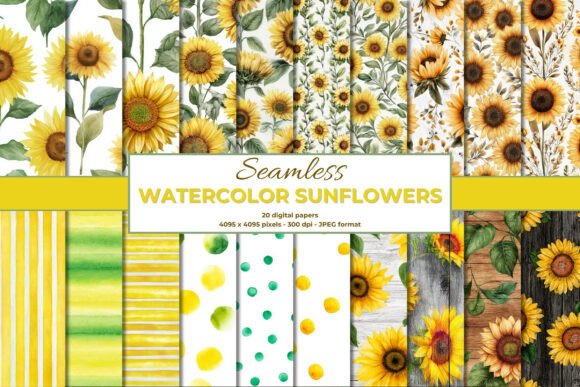
In the realm of visual design, texture is a critical component of visual hierarchy. A subtle watercolor sunflower background can guide the eye, create depth, and establish a mood without overwhelming primary content. This collection, featuring 20 seamless patterns at 300 DPI and 4095px, is engineered for professional use. The high resolution ensures crisp results for both print design and digital marketing materials, while the seamless tile feature guarantees perfect scalability for any application, from a small logo accent to a full-page packaging design spread.
Practical Applications for Creative Professionals
The true value of such an asset lies in its application across diverse creative projects. Consider how these papers can serve multiple facets of a design workflow:
- Brand Identity & Logo Design: Use a sunflower texture as a background for a logo presentation or as a pattern within brand collateral. It instantly communicates a friendly, artisanal, or agricultural brand identity, perfect for boutiques, florists, or organic product lines.
- Marketing & Social Media Graphics: Create cohesive social media graphics for Instagram stories, Pinterest pins, or Facebook ads. The cheerful patterns boost engagement and stop the scroll, especially for seasonal campaigns, summer sales, or fall promotions.
- Web & UI Design: Integrate these textures as hero section backgrounds, blog post banners, or subtle UI elements in web design. They add personality to user interfaces, improving the user experience (UX) by making pages feel more inviting and less sterile.
- Editorial & Print Layouts: Enhance magazine layouts, recipe cards, or wedding invitations. The watercolor style complements elegant typography beautifully, allowing serif or script fonts to pop against the textured backdrop.
- Packaging & Merchandise: Design standout product labels, wrapping paper, or tote bag prints. A seamless pattern is essential for creating professional-looking packaging design that feels cohesive and high-quality.
Integrating Textures into a Cohesive Design System
Effective use of patterned backgrounds requires strategic thought to maintain readability and visual hierarchy. A sunflower paper is a strong visual element; it should support, not compete with, your core message. Pair it with a clean color palette—perhaps pulling a single muted green or gold from the illustration for use in text or buttons. Employ ample white space or solid color blocks to create contrast, ensuring your body copy remains legible.
When selecting creative assets, evaluate their adaptability. These seamless papers are ideal for creating mockups, mood boards, or presentation backgrounds that require a consistent, professional finish. They streamline the design workflow, providing a ready-made foundation that accelerates production without sacrificing a custom, handcrafted feel. This efficiency is crucial for meeting tight deadlines in digital marketing and client work.
Elevating Aesthetics Through Thoughtful Asset Selection
Ultimately, the goal of any graphic design project is effective communication. Choosing assets like Watercolor Sunflowers Digital Papers is a deliberate decision to enhance that communication with emotion and texture. It demonstrates an understanding of how visual design influences perception, turning a simple document into an experience. By thoughtfully integrating such elements, designers can craft more compelling narratives, build stronger brand identities, and deliver work that resonates deeply with its intended audience, proving that the right background is never just a background—it's a storytelling tool.